Myth check · viral numbers
What 350,000 and 15,000 actually mean
MotionBricks threads live and die by two numbers, and most posts repeat them wrong. There is exactly one authoritative sentence to quote. Everything else on this page unpacks it.
Many community posts repeat a “5,000 FPS” figure. It is wrong: the official project page and README both state 15,000 FPS / 15000 FPS. Cite the paper, not the hype thread.
The one sentence everything traces back to
Subject, verb, object. One model, generating motion, fast, over a large clip corpus. Every correct reading is a parsing of this sentence; every viral misreading drops one of its pieces.
15,000 FPS: what it counts
The pair “350,000 / 15,000” that circulates in posts comes from two different axes of the same claim: 350,000+ motion clips in the training corpus (BONES-SEED, 142,220 retargeted G1 trajectories, ~288 hours), and 15,000 FPS runtime generation throughput. Neither number is a dataset size, and 15,000 FPS is not a monitor refresh rate — it is frames of motion the model can synthesize per second.
Unpacked: FPS here is frames the model generates per second of wall-clock time, not frames a display shows. A G1 humanoid animated by MotionBricks does not run at 15,000 Hz — nothing renders at that rate. The number measures synthesis headroom: how much faster the generator produces motion than the 50 Hz-ish control loops and 30–60 fps displays that consume it, which is what makes interactive, zero-shot control feasible on a single CUDA GPU in the first place. The companion figure — 2 ms latency — is per the official project page.
350,000: what it counts
Also from the correction above: the 350,000+ is a count of motion clips in the training corpus — the BONES-SEED collection README describes as production-grade mocap from real actors — not the name or size of a dataset you can point a browser at, and not parameters, and not skills in some locked menu. “Over 350,000 motion skills by a single neural backbone” is the claim that one model covers that corpus, which is the scalability point the SIGGRAPH 2026 paper spends its architecture sections earning.
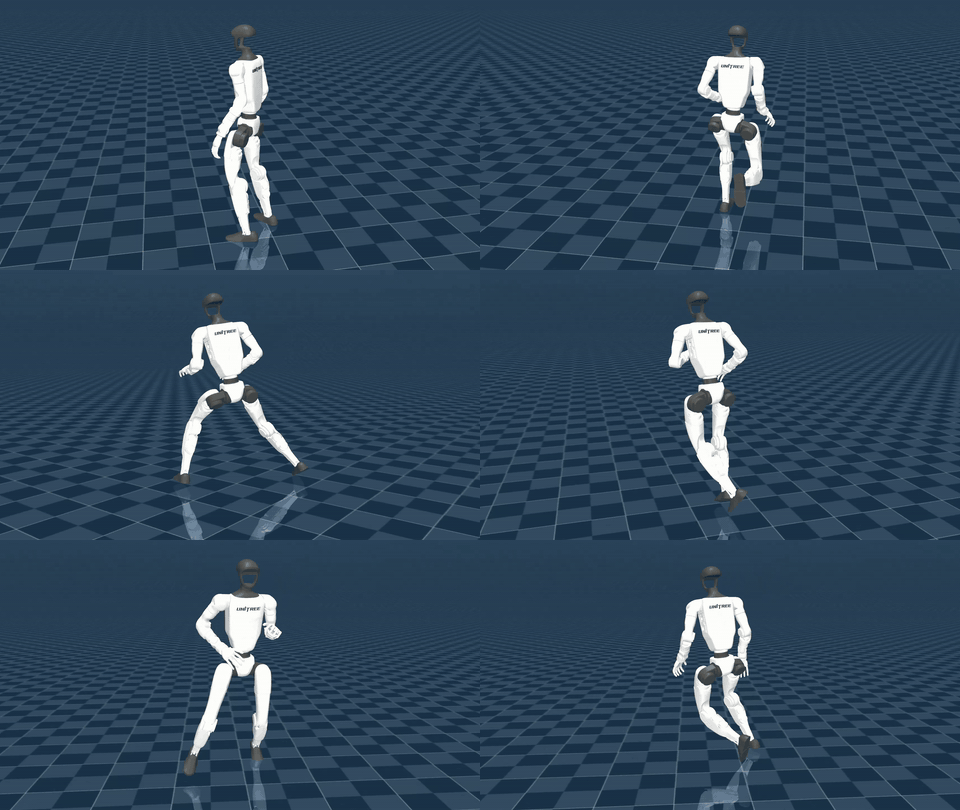
How to cite it without repeating the hype
- Quote the full sentence (or link it) instead of the bare numbers; context-free “15,000 FPS!” is where the misreadings start — including the phantom “5,000 FPS” that this site's home page already flags.
- Keep throughput and latency as separate claims: frames per second is not milliseconds per frame, and the page states both for a reason.
- Before quoting any other number you see circulating — a parameter count, a benchmark score — check whether it appears in the paper or README. If it appears only in a reply thread, it probably was invented in a reply thread.
Then go measure the claim yourself: the setup guide gets the interactive demo running, and the G1 controls page lists every key. Two milliseconds is hard to see, but zero-shot style-switching mid-stride is obvious the moment you press F.